 Infeagle
People Can’t Stop Talking About the blue dogs of Chernobyl – Here’s the Truth Behind Them!!!
1. The Viral Photo That Sparked Global Curiosity
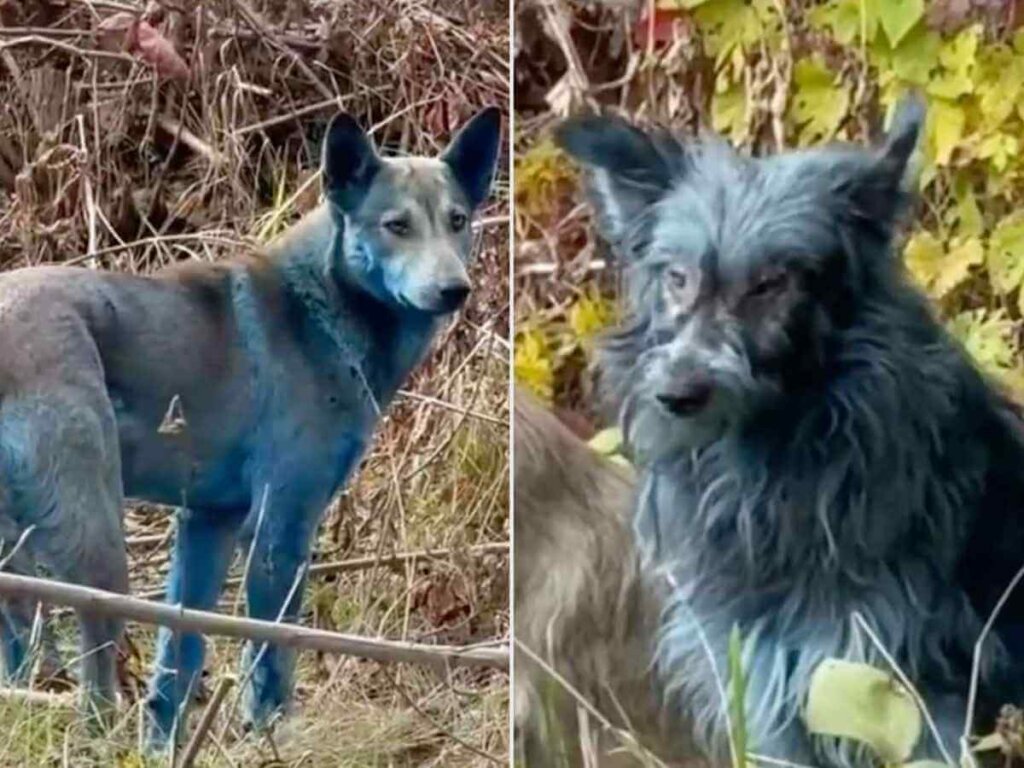
The blue dogs of Chernobyl became an internet sensation overnight when a researcher’s photo circulated online. It wasn’t staged, edited, or artificially enhanced. A real stray dog stood among decaying concrete and overgrown brush, its fur carrying a distinct bluish tint.
This single image ignited a wave of speculation: mutant species, radioactive evolution, genetic malfunction. The visual was so strange and so atmospheric that it felt like a still from a dystopian documentary.
The reason it went so viral? It captured a creature that wasn’t supposed to exist — a dog surviving in a place humans abandoned decades ago.
2. Yes, the Blue Dogs of Chernobyl Actually Exist in the Exclusion Zone
Multiple welfare teams and scientific groups have confirmed sightings of these blue-tinted dogs within the Chernobyl Exclusion Zone. Their color varies from smoky slate to subtle dusty blue — a shade that looks out of place against the ghost-town remains of Pripyat and the forests reclaiming it.
Seeing one move through the ruins creates a sense of dissonance. They look like ordinary stray dogs, but their coloring tells a different story: these animals have adapted to an environment shaped by contamination, abandonment, and time.
3. No, Radiation Does Not Dye Fur Blue
One of the first scientific myths researchers had to shut down was the claim that radiation caused the blue tint. Radiation is dangerous for many reasons: cellular damage, increased cancer risk, genetic mutations — but it does not produce cosmetic color changes like this.
The dogs did not glow. The breed did not show unusual physical deformities. They behaved like any other street-smart stray pack.
This forced scientists to look beyond nuclear explanations and trace the dogs’ movement patterns through the Exclusion Zone.
4. The Blue Tint Comes From Abandoned Industrial Waste

The real answer turned out to be disturbingly mundane and far more reflective of the long-term effects of industrial decay.
Many of these blue dogs live near abandoned factories and workshops left untouched after the 1986 evacuation. Inside these ruined structures are piles of pigment dust, chemical byproducts, metallic residue, and industrial waste that have been deteriorating for decades.
The dogs sleep in these buildings, brush against surfaces coated in chemical powder, or navigate tight spaces where pigment particles settle on their fur. Over time, this residue tints their coat, creating the blue effect captured in viral images.
It’s not a mutation.
It’s contamination.
5. These Dogs Are Descendants of Pets Left Behind in 1986
One of the most haunting aspects of this story is the lineage of the dogs themselves. When evacuations began after the Chernobyl disaster, residents were told they would return in a few days. Most left their pets behind, expecting to be reunited.
They never came back.
The dogs that survived formed packs, learned to hunt small prey, scavenged abandoned kitchens, and took shelter in factories, apartments, and crumbling rooftops. Over nearly four decades, they became a self-sustaining population, neither fully wild nor fully domestic.
Their existence is living proof of a disaster that froze time.
Recommended Article: Top 10 Aggressive Dog Breeds – All You Need to Know!
6. Scientists Studying These Dogs Found Something Unexpected
Researchers studying the Chernobyl blue dogs’ DNA expected dramatic mutations or abnormalities. Instead, their findings revealed a long-term record of adaptation — genetic patterns shaped by isolation, stress, limited breeding options, and environmental pressures.
The dogs weren’t monsters or anomalies. They were survivors.
Their genome didn’t show Hollywood-style mutations — it showed resilience under impossible conditions.
The Chernobyl blue dogs have become a biological archive of what happens when nature is forced to evolve without humans for nearly 40 years.
7. Their Blue Fur Symbolizes a Much Deeper Story
The color is striking, but the real meaning isn’t the hue itself. The blue tint signals constant interaction with toxic spaces — a visual marker of how deeply the disaster still lingers in the landscape.
These blue dogs remind us that Chernobyl is not empty. Life continues in the silence. Plants grow. Animals roam. But everything is tinted by the past — sometimes literally.
The blue coat becomes a symbol of survival in a world shaped by loss, decay, and contamination.
8. The Blue Dogs Reveal the Most Overlooked Impact of Chernobyl

When people think of the Chernobyl disaster, they imagine reactors, radiation, and abandoned cities. But the dogs expose a quieter truth: long after humans leave, their mistakes stay behind.
Factories corrode. Chemicals leak. Materials decay. Animals adapt.
These dogs aren’t the supernatural mutants people wanted them to be. They’re something more real — a reminder of the environmental ghosts that linger long after the headlines fade.
9. Their Story Is Still Being Written Today
Conservationists, researchers, and volunteers continue working in the Exclusion Zone, studying the dogs, feeding them, and trying to understand how they’ve endured this long.
Every new study reveals something deeper — about the effects of contamination, about animal adaptation, and about the long-term imprint of human disasters.
The blue dogs are just one chapter of that story, but they’re the one the world can’t stop talking about.
10. The Real Mystery Isn’t Why They’re Blue; It’s How They Survived at All?!
The color caught our attention, but the resilience keeps us hooked. These animals have endured harsh winters, radioactive hotspots, collapsing structures, and decades without stable human contact.
Their survival isn’t the result of mutation. It’s the result of instinct, adaptation, and inherited knowledge passed through generations of abandoned pets.
In the end, the blue dogs of Chernobyl aren’t symbols of mutation — they’re symbols of endurance.
They survived the disaster humanity couldn’t stay to face.
And that, more than their color, is what makes them unforgettable.
Disclaimer: We do not own any images posted in this article. It belongs to its respective owners. We do not use any of these images for commercial purposes. We intend no copyright infringement. Please let us know if we have accidentally used an image you own, and we will immediately remove it.